For many media organisations, deduplication is still viewed as a housekeeping task that nobody really wants to do. Something to tackle later. Once the migration finishes. Once the digitisation project wraps up. Once the archive is “under control”.
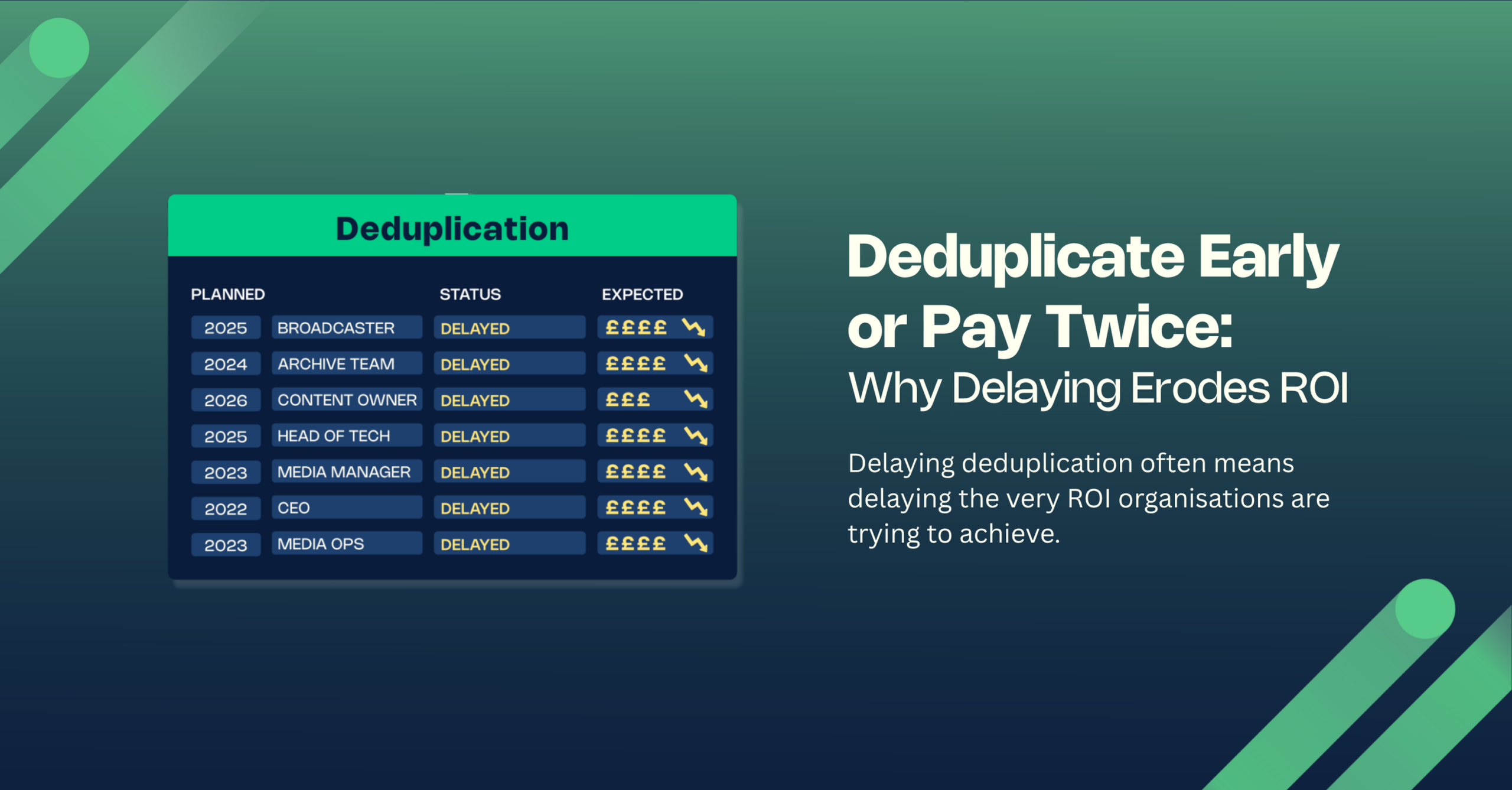
On paper, that sounds sensible. In reality, delaying deduplication often means delaying the very ROI organisations are trying to achieve.
We regularly speak with broadcasters, archive teams and content owners who are sitting on petabytes of material spread across LTO, cloud and production storage. In many cases, large-scale digitisation or archive modernisation projects are already underway.
The instinct is often: “Let’s not run too many projects at once. We’ll deduplicate afterwards.”
The problem? Every duplicate asset that enters the workflow continues generating cost, complexity and downstream processing overhead from day one.
Think about it this way: If you are migrating a 10-petabyte archive with a 20% duplication rate, you aren’t just paying to move 2PB of wasted space. You are paying to index it, back it up, and run cloud egress on data you don’t even need. Over a multi-year project, that ‘housekeeping task’ you delayed can easily and quietly drain six figures from your budget.
The Hidden Cost of Waiting
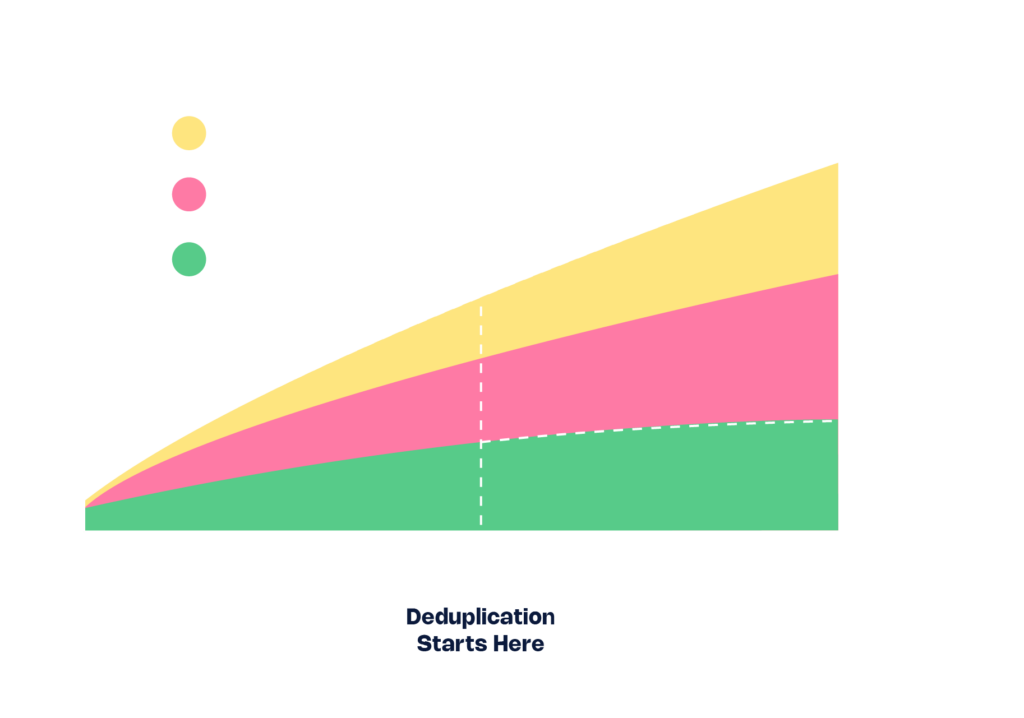
When duplicate or near-duplicate content is ingested into an archive environment, the impact compounds surprisingly quickly.
That content may now:
- Consume long-term storage
- Be backed up multiple times
- Be indexed repeatedly
- Be processed by AI enrichment tools
- Be migrated between storage tiers
- Appear in search results multiple times
- Require additional governance and management
And crucially, all of those costs continue accumulating throughout the lifespan of the project.
By the time a ‘post-project deduplication phase’ finally begins, organisations have often already paid months, or years, of unnecessary infrastructure and processing costs.
The “Garbage In” Problem for AI
This becomes even more important as organisations invest more heavily in AI workflows.
Many enrichment pipelines today process everything:
- every version
- every mezzanine
- every duplicate
- every near-duplicate
That creates a major efficiency problem.
If 20% of an archive is duplicated, then 20% of AI processing spend may also be duplicated. In large-scale environments, that can become incredibly expensive very quickly.
AI models charge by the hour or by the gigabyte processed. If you run your enrichment pipelines before deduplicating, you are essentially writing a blank cheque to your cloud or AI provider to analyse content you already own. If you haven’t deduplicated, you are overpaying for your AI initiative on day one.
Running deduplication before, or during, AI processing allows organisations to dramatically reduce unnecessary enrichment costs while improving the overall quality of the dataset being analysed.
In simple terms: cleaner inputs create smarter and cheaper AI workflows.
Deduplication Isn’t Just About Storage
Storage reduction is often the first benefit organisations focus on, and understandably so.
But in practice, the bigger long-term value is operational.
A well-managed fingerprinting layer can help organisations:
- Maintain archive quality over time
- Reduce future duplication growth
- Improve content discoverability
- Support archive governance initiatives
- Accelerate reuse workflows
- Optimise AI processing strategies
- Build more intelligent media supply chains
In other words, deduplication becomes less about deleting files and more about understanding content.
So, When Is the Right Time?
Usually, right now.
That doesn’t necessarily mean launching a huge standalone deduplication project on day one. But it does mean thinking about deduplication as part of the ingest and archive strategy itself, rather than a retrospective optimisation exercise.
Waiting until your migration, digitisation, or AI project is “finished” means accepting a massive, ongoing tax on your operational budget. Every day you wait is a day spent paying to store, back up, and enrich data you don’t need – money you will never get back.
The earlier you understand your content, the earlier you can start reducing waste, controlling costs and building a cleaner foundation for everything that follows.
And in modern media environments, that value compounds fast.
Book a demo of Match and stop paying for duplicate media.